Christopher Lee CMT#71439 707 - 331 - 5224 Santa Rosa, CA
Ergonomics:
*These ergonomic practices have helped me immensely. Check with your health care provider to see if these would be beneficial for your body.




Neutral body posture: We don’t want to force our bodies into positions that are uncomfortable or difficult to maintain. Working from where they live, I encourage clients to find new ranges of motion closer to a neutral posture. (The graphic is only a reference and not to rigidly maintain 24/7.)
• Sleeping: 1/3rd of our life is spent sleeping! Here are ways to support your body during rest so that you wake up rested, refreshed and relaxed.
oBack sleeping: Great position but can cause low-back pain. Try placing a pillow under the knees and support the natural curve of the spine.
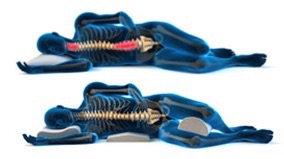
oSide sleeping: If back sleeping doesn’t work due to back pain or snoring, side-sleeping can be just as rejuvenative if done correctly.
1) Neck should be as straight as possible while maintaining comfort. Make sure head is elevated enough to maintain neutral spine.
2) Try getting your lower shoulder underneath you and your upper arm resting along the side of your body. Hugging a pillow for a few weeks can help your body transition to this position. This minimizes the inward crushing of the chest wall. However, when the lower shoulder is further underneath your body, your neck will need to be elevated (larger pillow) to maintain a neutral spine.
3) Legs can be slightly bent with a small pillow in-between the knees. This keeps the hips stacked and prevents a torque in the pelvis.
oStomach sleeping: Relaxing on your stomach is okay but sleeping in this position for long periods creates a significant amount of torque and compression on your cervical spine.
• Sitting: It’s the worst. Transition to mostly standing if you have to be at a desk all day. Veridesk has very affordable sit-stand solutions. Regardless of position, try to walk or move around every 45 minutes.
1) Head: Keep your ear over your shoulders.
2) Shoulders: Practice external rotation to keep them from rolling inward.
3) Arms: Elbow at 90 degrees, keep arms close to the body. Do not extend for repetitive movements.
4) Wrists: Keep neutral and inline with arm while typing or mousing. Wrist rests are invaluable but better yet is a Workrite Banana Board.
5) Spine: Ribcage neutral, low-back braced by your core.
6) Pelvis: Sitting on sitz bones, maintain a neutral position.
7) Thighs: Horizontal
8) Feet: Flat on the floor
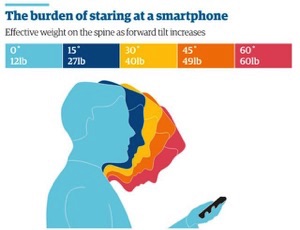
• Phone Use: We don’t like to admit it but, phone use takes up more of our lives than we’d like. Try to keep your neck in a neutral position with arms externally rotated and a neutral wrist.
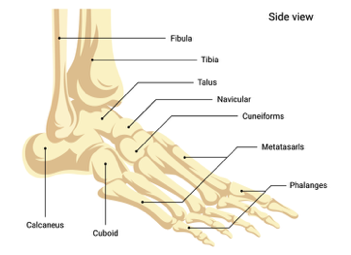
The Foot: The foundation of our balance and movement. There are 26 bones in each foot and ankle which is equal to the number of bones in your spine! Even if your pain doesn’t stem from your feet, proper mechanics can help get you move better and share the load. Both pronation and supination are needed as we walk but often one joint is pushed too far or doing the majority of the heavy lifting. Noticing where your weight is centered in your feet as you stand can give you an idea of how your body is organizing itself.
Maintenance:
*These are tools that I use to maintain my physical health. Check with your health care provider to make sure they are appropriate for your condition.